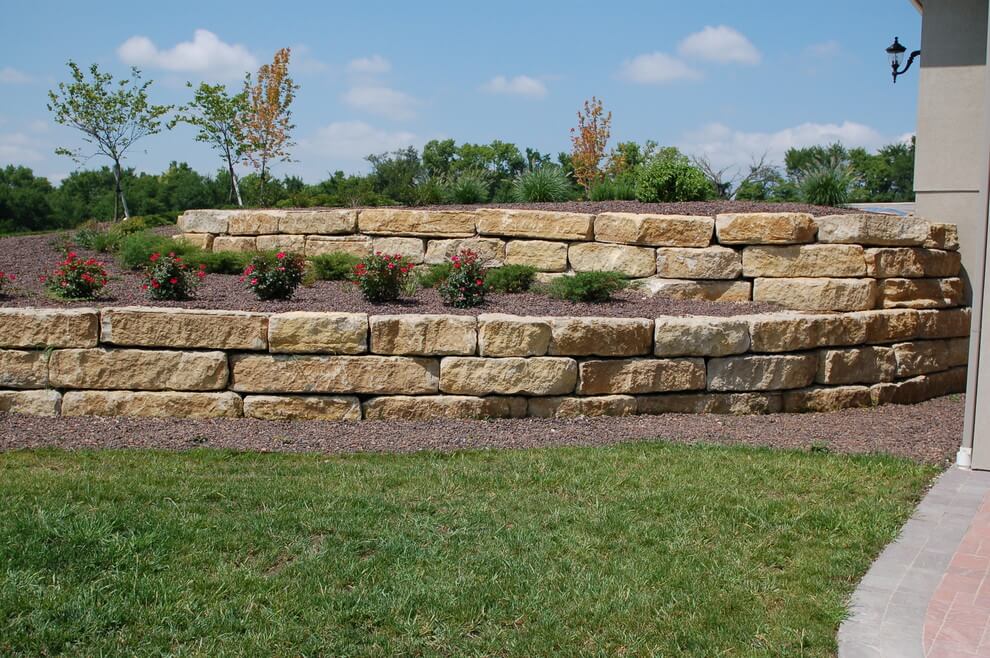
If your yard has a slope, you've probably already felt the frustration. Soil washing away after every heavy rain. Usable backyard space that feels impossible to enjoy. A hillside that looks more like a liability than an asset. Or maybe you already have a retaining wall that's starting to lean, crack, or bow — and you're wondering how much longer it's going to hold.
A professionally installed retaining wall solves all of that. It controls erosion, creates flat usable space out of sloped terrain, and — when built right — adds serious structure and beauty to your entire landscape.
But here's the thing: not all retaining walls are created equal. In Oakland County, Michigan, where clay-heavy soils and brutal freeze-thaw cycles put enormous pressure on everything underground, the difference between a wall that lasts 50 years and one that fails in five comes down entirely to how it was built.
This guide gives Oakland County homeowners everything they need to know — types of retaining walls, costs, what causes failures, how the installation process works, and how to choose the right contractor.
A retaining wall is a structure built to hold back soil and prevent it from sliding or eroding. But in practice, a well-designed retaining wall does a lot more than that.
On sloped properties across Oakland County, retaining walls are used to:
Whether you need a small decorative garden wall, a tiered system for a steeply sloped backyard, or a large structural wall to prevent erosion on a hillside, retaining wall installation is one of the most impactful landscaping investments you can make on an Oakland County property.
One of the first decisions in any retaining wall project is material selection. Each option has its own look, price point, and best use case. Here's a breakdown of the most common retaining wall types Driftwood Landscape builds for Oakland County homeowners:
The most popular choice for residential retaining wall installation in Michigan. Modular concrete blocks interlock without mortar, providing flexibility and strength. They come in a wide range of colors and textures, handle Michigan's freeze-thaw cycle well, and work for walls of almost any size. Geogrid reinforcement is added for taller walls to anchor the structure deep into the hillside. Cost range: $15–$60 per square foot installed.
For homeowners who want a natural, rugged look, boulder walls are hard to beat. Large natural boulders are placed and stacked to create a wall that blends seamlessly into the landscape. Boulder walls are excellent for controlling slopes and creating dramatic visual focal points. Because heavy equipment does most of the lifting, boulder walls can sometimes come in at a lower cost per foot than manufactured block. Cost range: $20–$50 per square foot installed.
Limestone is one of the most timeless and elegant retaining wall materials available. The natural texture and warm tones of limestone create walls that look like they've always been part of the landscape. Driftwood Landscape specializes in limestone wall construction across Oakland County — both as structural retaining walls and as beautiful garden feature walls. Cost range: $25–$65 per square foot installed.
For premium, high-end landscape projects, natural stone retaining walls deliver unmatched character and beauty. Granite, bluestone, and fieldstone are popular choices that complement Michigan's natural surroundings. Natural stone walls can be dry-stacked for a traditional look or mortared for maximum structural integrity on taller applications. Cost range: $30–$95 per square foot installed.
When maximum structural strength is required — especially near buildings or on high-load applications — poured concrete walls provide the ultimate in durability. These are among the longest-lasting retaining wall options, with lifespans exceeding 100 years when properly installed. Cost range: $20–$55 per square foot installed.
Retaining wall costs in Michigan typically range from $35 to $65 per square foot for professionally installed walls, depending on material, height, site conditions, and project complexity. For most residential Oakland County retaining wall projects, homeowners should expect a total investment in the range of:
Keep in mind that most retaining wall contractors have a project minimum of $2,500 or more. Site-specific factors that affect your retaining wall cost in Oakland County include:
Soil conditions. Oakland County is known for heavy clay soil that holds water and expands and contracts seasonally. This creates more lateral pressure on walls and often requires additional drainage work.
Wall height. Every foot of additional height increases the engineering requirements significantly. Walls over 3–4 feet typically require permits and sometimes engineered design drawings.
Site access. If heavy equipment can't easily reach your backyard, manual labor increases, which drives up the cost.
Drainage systems. Proper drainage behind a retaining wall is non-negotiable. Budget for a drainage system — French drains, perforated pipe, and gravel backfill — as part of your total project cost.
Existing surface removal. If an old failing wall needs to be demolished first, demolition typically adds $15–$30 per linear foot to the project.
This is the most important section of this entire guide. The overwhelming majority of retaining wall failures come down to three preventable causes:
Water pressure behind a retaining wall — called hydrostatic pressure — is the single leading cause of wall failure. When water has nowhere to go, it builds up, pushes against the wall, and eventually causes it to bow, crack, or collapse. Every retaining wall needs a properly designed drainage system that channels water away from the structure. This is not optional.
Michigan's frost line in Oakland County reaches approximately 42 inches deep. Any wall footing that doesn't extend below this depth is vulnerable to frost heave — the process by which frozen ground expands and literally lifts the base of the wall, causing it to tilt or shift over time. This is one of the most common mistakes made by inexperienced contractors.
Many contractors use whatever soil comes off the excavation as backfill behind the wall. In Oakland County, that usually means clay — which retains water instead of draining it, dramatically increasing pressure on the wall. Proper backfill uses clean crushed gravel that allows water to drain freely through and away from the wall structure.
When you hire a qualified retaining wall contractor in Oakland County, these three issues are addressed before a single block is placed. Ask your contractor specifically how they handle drainage, footing depth, and backfill — their answers will tell you everything you need to know about the quality of their work.
Understanding the installation process helps you know what to look for and what questions to ask.
A qualified contractor walks your property, assesses the slope, soil type, drainage patterns, and any existing structures. At Driftwood Landscape, this consultation is where we listen to what you want the space to accomplish and develop a plan that addresses both the structural and aesthetic goals.
In Oakland County, retaining walls under 3 feet generally don't require permits. Walls over 3–4 feet typically do, and walls exceeding 5 feet may require engineered drawings. A professional contractor handles the permitting process so you don't have to.
The ground is excavated to the required depth — going below the frost line for the footing. The base is graded, leveled, and compacted. This is the most critical step in the entire process. A proper base is what separates a retaining wall that lasts decades from one that fails prematurely.
Perforated drainage pipe and clean gravel are installed behind the wall's base to manage water flow. Weep holes or drainage outlets are incorporated to allow water to escape rather than build up behind the structure.
Whether it's concrete block, limestone, natural stone, or boulders — the wall is built from the base up with proper batter (backward lean into the hillside), tight joints, and precise placement. For taller walls, geogrid reinforcement is layered in as the wall rises to anchor it into the hillside.
Clean crushed gravel backfill is compacted in layers behind the wall. Cap blocks or coping stones are set along the top for a finished, professional appearance.
Before the crew leaves, your contractor walks the completed retaining wall with you to review the work, check drainage flow, and make sure you're fully satisfied with the result.
1. How deep are your footings, and do they go below the frost line?In Oakland County, footings need to reach at least 42 inches down. If a contractor can't give you a straight answer on this, walk away.
2. What's your drainage plan?Every professional retaining wall installation should include a detailed drainage system. Ask for specifics — perforated pipe, gravel type, weep hole placement.
3. What material do you use for backfill?The answer should be clean crushed gravel or similar free-draining material — not native clay soil.
4. Do you handle permits, and are you familiar with Oakland County requirements?A contractor who works regularly in Oakland County will know exactly what's required and will manage it for you.
5. Can I see examples of similar walls you've built locally?Local portfolio and local experience matter. Michigan soil and climate have specific demands. You want someone who knows Oakland County, not someone figuring it out on your property.
Do I need a permit for a retaining wall in Oakland County?In most Oakland County municipalities, walls under 3 feet in height do not require a permit. Walls between 3 and 4 feet may require a permit depending on your specific city or township. Walls over 4 feet typically always require a permit and sometimes engineered drawings. Your contractor should handle this process.
How long does a retaining wall last in Michigan?A professionally installed retaining wall with proper drainage and footing depth can last 50 to 100 years or more, depending on the material. Concrete and natural stone walls have the longest lifespans. Timber walls, while less expensive, typically last 20–40 years before requiring replacement.
What's the difference between a retaining wall and a garden wall?A retaining wall holds back soil and is a structural element. A garden wall is primarily decorative and freestanding, not designed to withstand significant soil pressure. The installation requirements are very different — structural retaining walls need proper base preparation, drainage, and footing depth that decorative walls don't require.
Can a retaining wall help with drainage problems in my yard?Yes — when designed correctly, a retaining wall can redirect water flow and significantly improve drainage on a sloped property. This is especially valuable in Oakland County, where clay soil and flat yards can lead to serious water management challenges.
My current retaining wall is leaning — does it need to be replaced?It depends on the degree of lean and the condition of the base. Minor issues can sometimes be corrected. However, walls that have tilted more than a few inches, developed a significant bulge, or show base-level failure usually need to be completely rebuilt. A professional assessment will tell you which situation you're in.
At Driftwood Landscape LLC, we've been building retaining walls across Oakland County for over a decade. Our team builds walls the right way — with proper footing depth, drainage systems, and quality materials — because we know the Michigan climate doesn't forgive shortcuts.
We build in concrete block, natural stone, limestone, and boulders. Whether you need a small garden wall to define a planting bed or a large tiered retaining wall system to transform a sloped backyard into usable outdoor space, we design and build it with the same standard of craftsmanship.
Our clients in Bloomfield Hills, Troy, Rochester Hills, and across Oakland County trust us because we communicate clearly, show up on time, and deliver work that holds up long after the project is finished.

Whether your yard is sloped, eroding, or you have a failing wall that needs attention — the team at Driftwood Landscape is ready to take a look and give you honest, straightforward guidance.