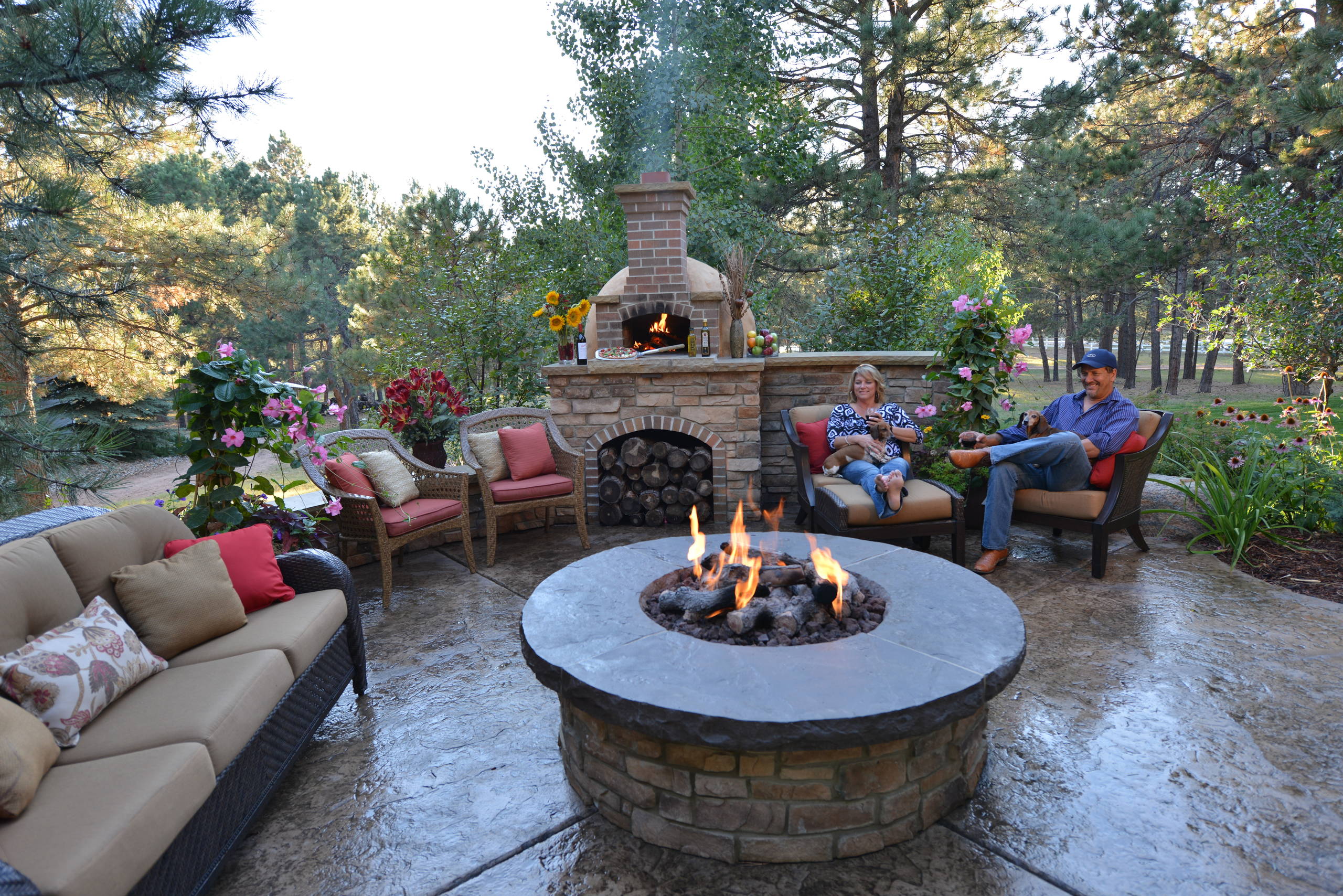
Michigan's outdoor season feels short — until you add fire. A well-placed fire pit or fireplace doesn't just look good on a patio, it functionally stretches how many months a year that patio actually gets used. For a lot of Oakland County homeowners, adding fire is the single change that turns an outdoor space from "summer only" into something used from April through November.
Fire Pit vs. Outdoor Fireplace: Which Fits Your Yard
These aren't interchangeable choices, and we walk every client through the difference before design starts.
A fire pit is typically a lower, freestanding or built-in feature — round, square, or linear — that serves as a gathering point. It works well when you want seating on all sides and a more casual, campfire-style feel. Fire pits are usually more budget-friendly and easier to fit into an existing patio layout.
An outdoor fireplace is a vertical structure, often built against a wall or as a standalone feature with a mantel and chimney. It creates a more formal focal point — think of it as the living room fireplace, just moved outside — and works best when there's a clear "front" to the seating area, similar to how furniture faces a TV indoors.
Gas vs. Wood-Burning in a Michigan Climate
This is one of the most common questions we get, and the honest answer is: it depends on how you'll use it.
Gas fire features light instantly, produce consistent heat, and don't require stocking or storing firewood — a real advantage when six inches of snow is sitting in your backyard in January and you just want flame at the flip of a switch. Wood-burning features have a more traditional ambiance and a scent and sound gas can't replicate, but they require more maintenance, ash cleanup, and a dry, accessible wood supply.
We build both, and for Oakland County properties specifically, we pay close attention to gas line placement, clearances from structures per local code, and proper venting for wood-burning fireplaces so smoke doesn't blow back toward seating.
Material Choices That Handle Freeze-Thaw
Just like retaining walls and paver patios, fire features in Michigan need materials rated for repeated freezing and thawing. We typically build with:
Cutting corners on the firebox lining specifically is a mistake we see from other contractors — using non-fire-rated stone leads to cracking within a season or two of regular use.
Seating and Layout Considerations
A fire feature is only as good as the seating around it. We design built-in seat walls, paver patios sized for furniture, and sightlines that keep smoke direction (prevailing wind) away from where people actually sit. For families who entertain larger groups, we often recommend a fire pit with a larger diameter and a mix of built-in seating plus movable chairs, so the space flexes between an intimate night and a bigger gathering.
What It Costs and Why
Pricing depends heavily on gas vs. wood, size, and whether it's a standalone fire pit or a full fireplace with a mantel and chimney. We provide a detailed breakdown during your consultation so you know exactly what's built into the price — labor, materials, gas line work if applicable, and any permitting required by your municipality.
The team at Driftwood Landscape has built fire features across Bloomfield Hills, Rochester Hills, and Birmingham that get used well past the point most patios go dormant for the year.

Schedule Your Free Consultation with Driftwood Landscape →
Let's build the feature that keeps your yard alive all season long.