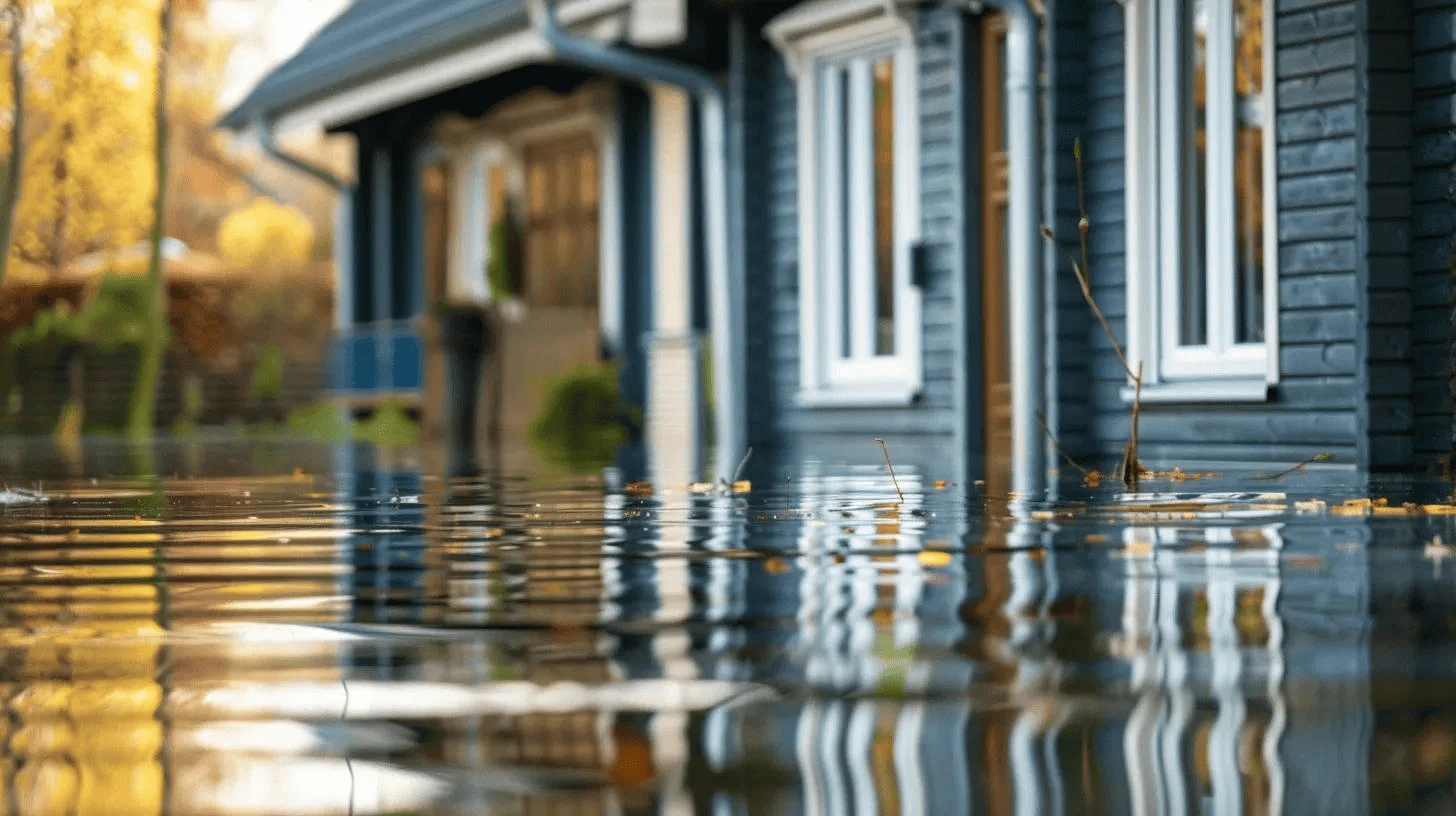
Standing water in a backyard isn't just an eyesore — it's a slow-moving threat to your foundation, your lawn, and any hardscaping you've already invested in. In Oakland County, where clay-heavy soil doesn't absorb water quickly and spring brings a steady mix of rain and snowmelt, drainage problems are one of the most common calls we get, often from homeowners who've already tried a surface-level fix that didn't hold.
Why Oakland County Yards Are Especially Prone to Drainage Issues
Southeast Michigan sits on predominantly clay-based soil, which compacts easily and drains far slower than sandy or loamy soil found in other regions. Combine that with our seasonal pattern — heavy spring snowmelt, summer thunderstorms, and fall rain — and it's easy for water to have nowhere to go except pooling against a foundation, saturating a lawn, or eroding a slope.
Newer construction adds another layer to this. Many Oakland County subdivisions were graded during development in ways that direct water toward specific low points, and those low points don't always end up where they should. If your yard consistently holds water in the same spot 24-48 hours after rain, that's a grading or drainage issue, not something that will resolve on its own.
Common Drainage Problems We Diagnose
Solutions We Design and Install
Every property gets a different fix depending on the root cause, but our most common solutions include:
French drains — a gravel-filled trench with a perforated pipe that redirects subsurface water away from problem areas, ideal for yards where water sits below the surface.
Catch basins and area drains — grated inlets placed at low points that capture surface water and pipe it away, often used near patios, driveways, and low spots in the lawn.
Dry creek beds — a functional drainage solution disguised as a landscaping feature, using river rock and strategic grading to move water visibly and attractively across a yard.
Downspout extensions and underground piping — routing roof runoff well away from the foundation instead of letting it dump at the base of the house.
Regrading — in some cases, the most effective fix is correcting the slope of the yard itself so water naturally flows away from structures rather than toward them.
Why DIY Fixes Usually Fail
We regularly get called in after a homeowner has tried a home-improvement-store French drain kit or added a small berm themselves. These fixes often fail because they don't account for the actual volume of water moving through the property or where it's ultimately being redirected — sometimes just pushing the problem a few feet over instead of solving it. A proper drainage plan starts with understanding your property's grading, soil composition, and where water naturally wants to go.
Protecting Your Hardscape Investment
If you're planning a paver patio, retaining wall, or outdoor kitchen, drainage isn't optional — it's foundational. Poor drainage is one of the leading causes of retaining wall failure and paver settling in this region. We integrate drainage planning into every hardscape project from the start, rather than treating it as an afterthought once water damage has already occurred.
What Affects Cost
Drainage solutions vary widely in price depending on the scope — a single downspout extension is a minor fix, while a full French drain system across a large Bloomfield Hills or Rochester Hills lot with multiple catch basins is a bigger undertaking. We assess your specific water flow pattern on-site before recommending a solution, rather than quoting blind.
The team at Driftwood Landscape has solved persistent drainage issues across Oakland County that other approaches only masked temporarily.

Schedule Your Free Consultation with Driftwood Landscape →
Let's stop the water before it costs you more.