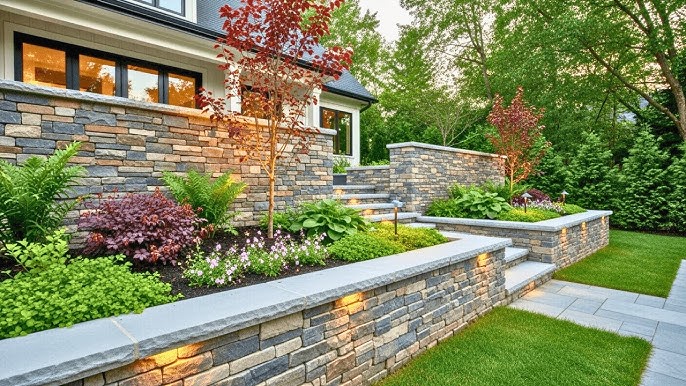
A retaining wall is more than a decorative feature—it’s a structural system designed to support soil, prevent erosion, manage drainage, and create usable space in your yard. With so many online tutorials and DIY videos available, some homeowners are tempted to build retaining walls themselves. But retaining walls—especially in Michigan’s freeze–thaw climate—require engineering, skill, and precise installation to perform safely and last for decades.
As a result, many DIY walls fail within the first few years, leaning, bowing, cracking, or collapsing entirely. Professional installation, on the other hand, ensures stability, longevity, and a clean, polished appearance that adds lasting value to your home.
In this blog, we’ll break down the differences between DIY retaining walls and professional installation so you can make an informed decision for your Oakland County landscape.
DIY retaining walls are appealing for several reasons:
However, what many homeowners don’t realize is that retaining walls require far more knowledge and preparation than they appear to on the surface.
Retaining walls fail more often than any other hardscape project—especially when installed by inexperienced hands. Here’s why:
A successful retaining wall must begin with a deep, compacted gravel base. DIY installers often:
This leads to sinking, shifting, and instability.
Drainage is the most essential part of any retaining wall. Without proper drainage:
Many DIY walls lack:
A retaining wall without drainage is a ticking time bomb.
Even small walls can require reinforcement. DIY installers often:
In Michigan, where frost heave is common, this is especially risky.
Not all stones, blocks, or boulders are suitable for retaining walls. DIY builds frequently use:
This results in unstable walls.
Professional wall installers use:
DIY installers often rely on hand tools, which aren’t sufficient for a wall's structural demands.
Driftwood Landscape builds retaining walls designed to withstand Michigan weather and soil conditions for decades.
Here’s what you get with a professional installation:
Professionals excavate deep enough to:
A solid base is the foundation of a long-lasting wall.
Driftwood installs:
This prevents water buildup—the #1 cause of wall failure.
Whether your wall is:
…the structure must be engineered correctly. Driftwood ensures:
This creates a safe, long-lasting retaining system.
Professionally installed walls feature:
DIY walls often show unevenness or leaning because the base isn’t perfectly level.
Driftwood chooses retaining materials that excel in:
This ensures your wall ages gracefully.
A professionally built retaining wall:
DIY walls may need repair—or complete replacement—within a few years.
If your existing wall shows any of the following, it may require professional repair or rebuilding:
These issues indicate structural failure caused by improper construction.
Driftwood installs all major types of retaining walls, including:
✔ Nearly indestructible
✔ Natural appearance
✔ Ideal for large slopes
✔ Clean, elegant look
✔ Strong and long-lasting
✔ Great for front yard accents
✔ Modern appearance
✔ Engineered systems
✔ Excellent for tall or load-bearing walls
✔ Beautiful organic texture
✔ Works well with gardens
✔ High-end appeal

Driftwood Landscape offers expert retaining wall installation built to last through Oakland County’s challenging climate.